
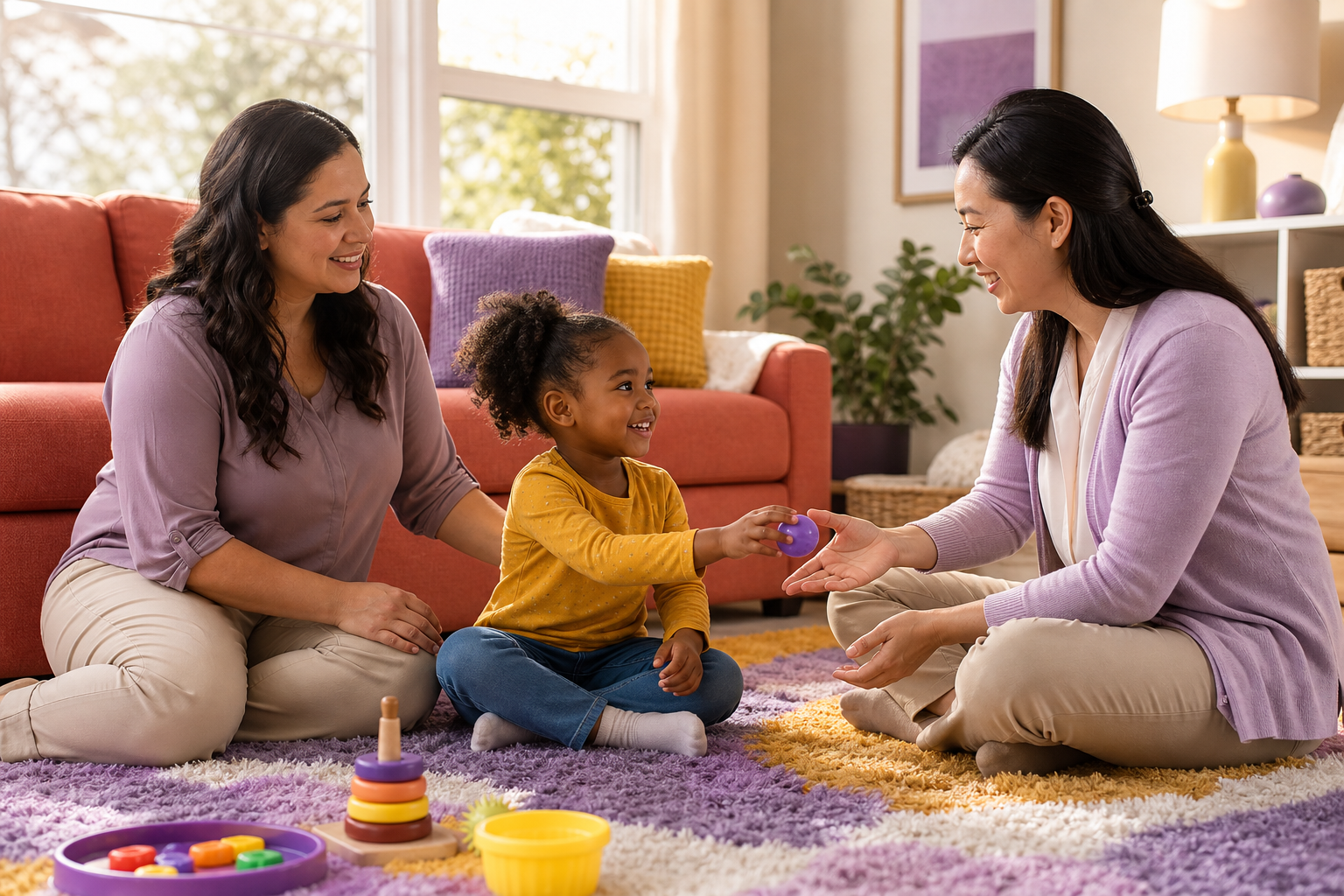
If you’re searching for ABA therapy in Smyrna, GA, in-home care can bring individualized, BCBA-supervised support into the routines where a child spends time, including the transition from school to home. Samba ABA provides care exclusively in the home. The schedule, service area, and coverage still depend on the child’s needs, your address, staffing, and plan requirements.
Coordinating school pickup, work, siblings, homework, meals, and therapy can feel like a lot. An in-home model may reduce an extra commute while giving the care team a chance to understand routines in the natural environment. Families in Smyrna, Marietta, and nearby Cobb County can start with Samba ABA’s in-home ABA therapy in Smyrna.
Key facts
- Setting: 100% in-home care with BCBA-led assessment and planning, direct service from an RBT when applicable, and caregiver collaboration.
- Fit: The central question is whether support can address a child’s needs during a workable home or school-to-home routine.
- Age range: Samba ABA’s services generally support toddlers through adolescents, with goals shaped around each child.
- Coverage: Georgia Medicaid and private insurance requirements, including documentation and prior authorization, must be verified case by case.
- Next step: A consultation can clarify local coverage, assessment needs, scheduling, and service fit.
Why In-Home ABA May Fit the School-to-Home Transition
Skills matter most when children can use them in everyday life. An in-home session might focus on communication during a snack, moving from the bus or car into the house, homework, play with a sibling, dressing, safety, or bedtime preparation.
For younger children, natural routines and caregiver coaching may be important parts of the plan. For school-age children and adolescents, families may want to talk about after-school regulation, independence, daily living, or participation at home.
Home is not automatically the best setting for every goal. Center-based care may offer more structured group opportunities, while school or community services may support skills in those environments. The right mix depends on the child, family capacity, and clinical assessment.
The Cobb Routine-Bridge Framework
Use these four questions to connect school-day realities with home-based care:
Pinpoint the pressure point
Which routine is hardest right now? It might be pickup, transitions, meals, play, homework, bedtime, or communication. Describe what happens in that setting, not only the diagnosis.
Map the workable window
Consider dismissal, caregiver availability, siblings, privacy, home space, and travel radius. A sustainable schedule is part of clinical fit.
Match the partnership
Ask who completes the BCBA assessment, how direct services are supervised, what caregiver coaching involves, and how the team communicates. Privacy, punctuality, and household boundaries matter.
Define everyday progress
Talk about observable changes in communication, self-regulation, participation, independence, or daily living. Plans should be measured and reviewed rather than tied to a guaranteed timeline.
School-to-Home Fit Questions
Before contacting a provider, consider:
- Do the hardest moments happen at home, during the transition, or across settings?
- What session window works around dismissal, work, meals, and bedtime?
- Can caregivers and siblings participate without making the routine unsustainable?
- Are privacy, space, safety, and household boundaries ready for in-home care?
- Is the priority routine carryover, social exposure, or both?
- Does the exact Smyrna-area address fall within the provider’s current travel radius?
- Which referral, benefits, assessment, and authorization steps need to be verified?
- Are BCBA and RBT roles, caregiver communication, and progress updates clear?
Your answers may point toward investigating in-home care, comparing settings, or verifying coverage and local availability before making a decision.
Compare Fit and Verify Next Steps in Smyrna
In-home care may support routine carryover and caregiver participation. Center-based care can provide a different kind of structure and social opportunity, while school or community services bring support into those settings. For a broader comparison, see how in-home ABA therapy compares with school-based care.
The care pathway may include an inquiry and benefits review, a BCBA assessment in the home, an individualized plan with measurable goals, supervised implementation when applicable, caregiver collaboration, and ongoing adjustments. Timing varies with documentation, assessment findings, payer rules, staffing, and address. Verify your own plan rather than assuming approval or a start date.
For families in Smyrna and nearby Marietta, confirm the exact address, travel radius, current availability, insurance, and scheduling options during a consultation. Samba ABA’s Smyrna service page has provider-specific information.
FAQs Families in Smyrna and Cobb County Ask
Is in-home ABA therapy available in Smyrna, GA?
Samba ABA has a Smyrna service page for in-home ABA therapy. A family’s fit still depends on address, staffing, clinical needs, and coverage, so confirm current availability during a consultation.
Can ABA sessions fit after school or in the early evening?
They may, but the schedule depends on school dismissal, family routines, clinician availability, and travel radius. Ask about workable windows instead of assuming a fixed time.
Does a parent or caregiver need to be home during in-home ABA?
Caregiver participation and coaching are part of Samba ABA’s family-integrated model, but exact expectations vary by goals and plan. Ask how the team will involve caregivers while respecting privacy and household boundaries.
Does Georgia Medicaid or private insurance cover in-home ABA therapy?
Some plans cover ABA, but benefits, documentation, diagnosis, and authorization rules vary. Review the Georgia in-home ABA family guide for general background, then verify details with your plan and provider.
If you’re exploring ABA therapy in Smyrna, start with the routine that matters most and bring these questions to a consultation. Samba ABA’s 100% in-home approach is designed to support children and empower families in the natural environment.