
Preparing for in-home ABA therapy takes less work than most parents expect. You do not need a therapy room, special furniture, or a spotless house.
Your home does not need to be perfect. It needs to be yours. This guide covers the few things that do help, from a small learning space to a checklist for the first week.
Do you need a special therapy room for in-home ABA?
No. That is intentional.
The point of in-home ABA therapy in Georgia is to teach skills where your child will use them. A child who learns to put on shoes in your actual hallway, by your actual front door, does not have to relearn the skill somewhere else.
Your child’s Registered Behavior Technician (RBT) brings the materials they need and works with the spaces you already have. Families in small apartments do in-home ABA every day.
How do you set up a learning space for in-home ABA therapy?
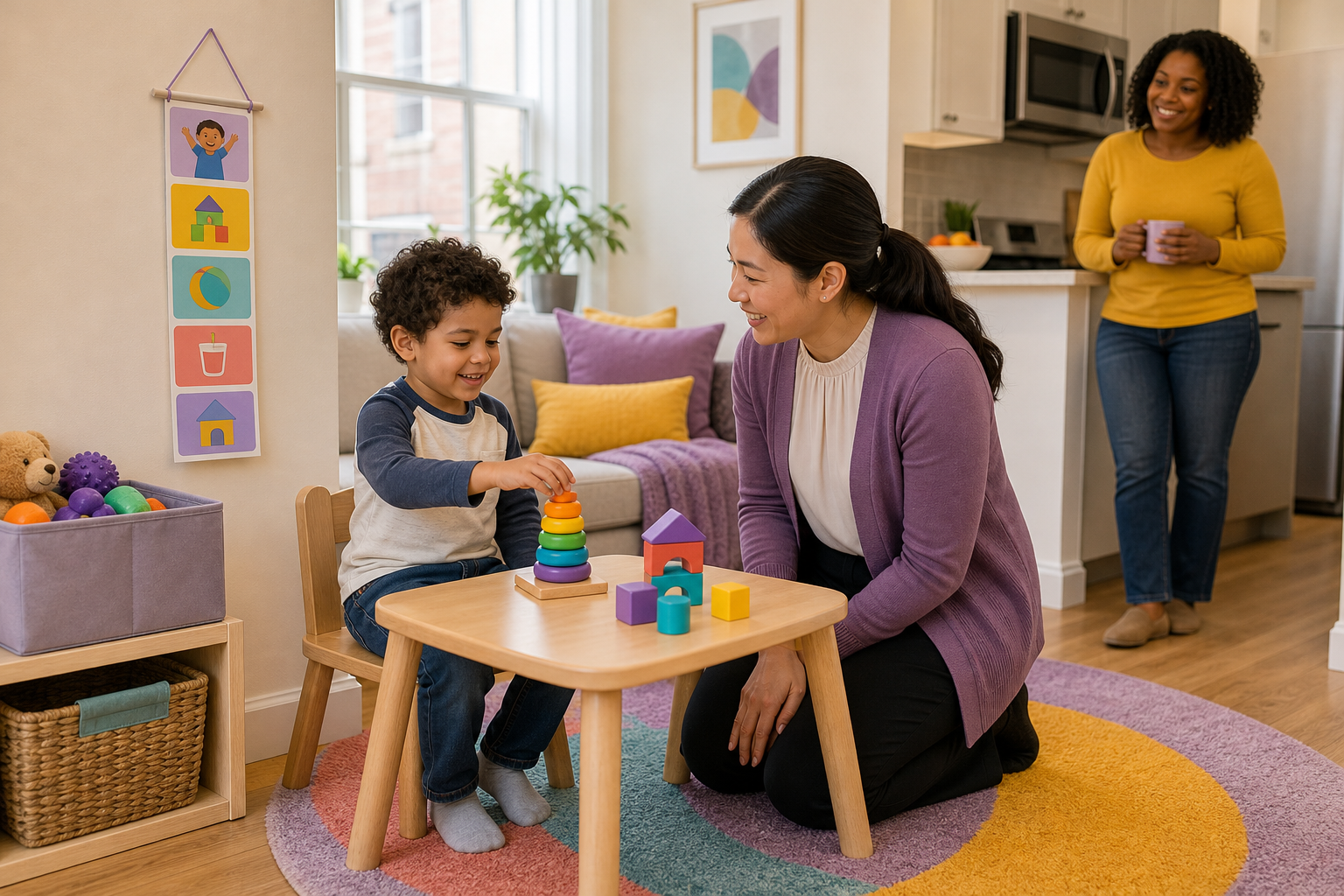
Some parts of a session involve focused work, like practicing a new skill several times in a row. For those moments, a little setup helps:
- A small table or clear floor area. A kitchen table, a child-sized table, or an open spot on the rug gives your child and the RBT room to work face to face.
- Fewer distractions during focused work. Turning off the TV and putting away a few toys helps your child pay attention to the task.
- A bin for favorite items. Keep your child’s most-loved toys and snacks in one place. The RBT can use them as rewards, and they work best when your child does not have free access to them all day.
- Decent lighting. Picture cards and small objects are easier to see in a well-lit spot.
- Safety basics. Outlet covers, secured furniture, and anything breakable moved out of reach.
- A spot for the clinician’s materials. A shelf or corner where the RBT can put their bag and tablet.
If your BCBA suggests visual supports, like a picture schedule on the wall, this space is a good place for them. The ATN/AIR-P visual supports tool kit explains how families use them at home.
How are everyday spaces used for natural learning?
Much of in-home ABA happens away from the table, inside daily routines. This approach is called Natural Environment Teaching (NET): teaching skills during play and everyday activities, using what your child is already interested in.
Room by room, it might look like this:
- Kitchen. Asking for a snack, helping set the table, or waiting for a turn to pour.
- Bathroom. Handwashing and toothbrushing, broken into small steps.
- Play area. Taking turns, sharing, and joining pretend play.
- Yard or porch. Following directions outside, like “stop” and “come here.”
You do not need to rearrange anything for this. The RBT works within your routines.
To learn how NET compares with more structured teaching, read DTT vs. NET in ABA Therapy: Which Approach Fits Your Child?
What should you have ready before the first week?
A little preparation makes the first sessions smoother. Here is a checklist:
- Diagnosis report and physician referral. These are usually needed for insurance before sessions can begin.
- Insurance card. Keep a copy handy for any questions during intake.
- A list of your child’s favorites. Activities, foods, toys, shows, songs. This helps the RBT connect with your child quickly.
- Your typical daily schedule. Wake-up, meals, naps, school, and bedtime help the BCBA plan sessions around real life.
- Contact details for other providers. Speech therapist, occupational therapist, pediatrician, and school, if your child has them.
- A plan for siblings and pets. Siblings can sometimes join parts of a session, but a quiet option for focused work helps. Pets may need to be in another room.
- Parking and entry instructions. Gate codes, building access, or where to park.
None of this is a test. If something is missing, the team will help you sort it out. If your child also sees other providers, the CDC’s overview of autism treatment describes how different therapies often work together.
What is your role during the first week of sessions?
A parent or caregiver is usually home during sessions, especially for younger children. You do not have to hover. Being nearby lets you see what the RBT is doing and answer questions about your child.
The first weeks focus on rapport. For roughly the first month, the RBT spends a lot of time playing, learning what your child enjoys, and becoming someone your child is happy to see. It may look like playtime. It is the foundation for everything that follows.
Caregiver training starts from the beginning, too. Share what you notice with your Board Certified Behavior Analyst (BCBA), including what is going well and what is hard. A Registered Behavior Technician works under the BCBA’s supervision, so your observations reach the person writing the plan.
For a closer look at that first visit, read What to Expect During Your Child’s First In-Home ABA Therapy Session.
Frequently asked questions
Do I need to buy toys or supplies?
No. The RBT brings materials and also uses the toys and items you already have.
Can in-home ABA sessions happen in a small apartment?
Yes. A small table or a clear spot on the floor is usually enough.
What if my home is busy or noisy?
That is normal family life, and it is part of what your child is learning to handle. For focused work, a quieter corner helps, but the RBT will work with what you have.
Ready to get started?
A small learning space, a list of favorites, and your paperwork in one place will make the first week of in-home ABA smoother for everyone. If you have questions about getting started, our team can help.
Schedule an intake call with Samba ABA or call (404) 779-8860.