
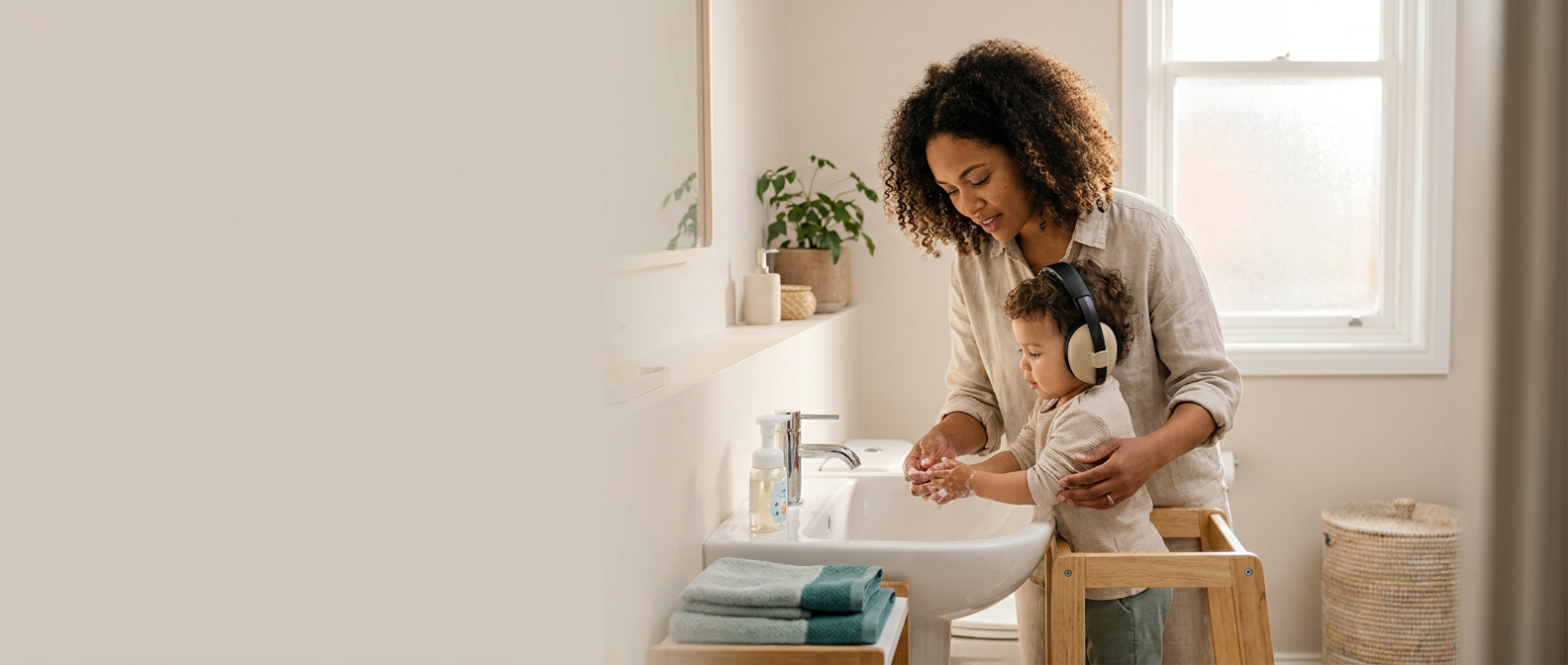
Every milestone a child achieves is a cause for celebration, but the milestones reached within the walls of the family home carry a profound significance. For children, toddlers, and adolescents on the autism spectrum, learning how to confidently navigate daily routines—such as getting dressed independently in the morning, sitting constructively at the family kitchen table for a meal, or brushing teeth thoroughly before bed—forms the bedrock of lifelong autonomy.
At Samba ABA, we believe that these vital capabilities should not be simulated in an artificial clinic setting, nor do we attempt to transform your living room into a cold, rigid “mini-clinic.” Instead, we embrace your household exactly as it is: a place of natural growth. By delivering a 100% in-home model of Applied Behavior Analysis (ABA) therapy to families across Georgia, our highly trained Board Certified Behavior Analysts (BCBAs) and Registered Behavior Technicians (RBTs) help your child build vital functional life skills directly within the environments where those behaviors matter most.
When a child learns to navigate their own home, they are not just memorizing tasks; they are learning how to thrive in their world. This comprehensive guide explores how specialized, home-based autism daily living skills training transforms vulnerable moments into milestones of lasting, measurable results.
Understanding Activities of Daily Living (ADLs) in Autism Care
Activities of Daily Living, commonly referred to as ADLs, encompass the fundamental, everyday tasks that individuals must manage to live safely, healthily, and independently. For neurotypical children, these skills are frequently absorbed through observational learning and casual imitation. For individuals on the autism spectrum, however, processing the multi-step sequences required for seemingly simple routines can present significant neurological and executive functioning challenges.
Rather than viewing these challenges as deficits, the clinical philosophy at Samba ABA breaks down every complex routine into accessible, micro-steps using evidence-based behavioral science. We approach ADL training for autism by honoring the emotional well-being of the child and the unique culture of the household.
Our comprehensive services target a wide spectrum of functional life skills, carefully categorized to address the holistic development of toddlers through young adults:
Personal Hygiene and Self-Care Routines
Hygiene tasks are often a primary source of sensory aversion for children on the spectrum. The sound of running water, the texture of toothpaste, or the friction of a hairbrush can trigger intense flight-or-fight responses. Our in-home ABA therapist routines gently desensitize children to these stimuli in their own bathrooms. We systematically address:
- Toothbrushing: Managing sensory responses to bristles and taste, learning proper brushing motions, and understanding when to spit and rinse.
- Handwashing and Bathing: Mastering water temperature regulation, sequencing soap application, thorough rinsing, and drying.
- Toileting: Establishing consistent, reliable bathroom schedules, recognizing internal physiological cues, and mastering post-toileting hygiene.
Dressing and Personal Grooming
Getting ready in the morning sets the tone for a child’s entire day. For parents who are already overwhelmed by the logistics of managing a household, morning dressing struggles can create immense friction. Samba ABA introduces compassionate, structured scaffolding to teach:
- Fine Motor Manipulation: Managing buttons, snapping press-studs, aligning zippers, and tying shoelaces.
- Environmental Awareness: Selecting clothing items appropriate for seasonal Georgia weather and specific social contexts (e.g., school vs. bedtime).
- Spatial Orientation: Discerning the front from the back of garments, and left shoes from right shoes.
Mealtime Dynamics and Household Integration
Food selectivity, oral-motor sensitivities, and difficulties sitting still can make family meals highly stressful events. We work directly at your kitchen table to foster peaceful, inclusive experiences by targeting:
- Utensil Mechanics: Transitioning from finger-feeding to the proper, safe handling of forks, spoons, and knives.
- Table Endurance: Building the behavioral stamina required to sit constructively with family members for the duration of a meal.
- Dietary Expansion: Introducing new food textures, temperatures, and flavors slowly and systematically without coercion.
- Post-Meal Routines: Clearing dishes, wiping down spaces, and participating in age-appropriate household chores.
Functional Communication for Immediate Needs
An inability to communicate immediate physical needs is one of the leading causes of intensive target behaviors. We integrate functional communication training (FCT) directly into daily routines, ensuring your child can effectively signal:
- Physical discomfort or illness.
- Hunger, thirst, or satiety.
- The need for an emotional break or a change in sensory environment.
The Generalization Advantage — Why the Natural Environment Wins
In behavioral psychology, a child’s ability to take a skill learned in one environment and successfully apply it in a completely different context is known as generalization. For individuals on the autism spectrum, generalization does not happen automatically. It must be intentionally planned, taught, and reinforced.
Consider the traditional clinic-based therapy model. A child may successfully learn to wash their hands at an artificial clinic sink featuring automatic sensors, perfect lighting, and an isolated environment. However, when that same child returns home, they are suddenly faced with a manual twist-faucet, a different height requirement, a flickering overhead light, and the background noise of a sibling watching television. Frequently, the skill breaks down entirely because the environmental cues have changed.
The Generalization Gap:
Clinic Model: Skill Taught in Clinic -> Artificial Setup -> Struggle to Repeat at Home
Samba in-home Model: Skill Taught at Home -> Natural Household -> Automatic, Lasting Success
By focusing 100% exclusively on home-based care, Samba ABA eliminates the generalization gap entirely. We teach your child to wash their hands at their bathroom sink, eat at their kitchen table, and sleep in their bed.
Why Real-World Context Matters
- Authentic Triggers: We observe and intervene during the exact moments behaviors naturally occur. If a child experiences a meltdown specifically when it is time to turn off a favorite video game at home, that is the precise moment our team can implement compassionate, real-time de-escalation and coping strategies.
- Utilizing Existing Routines: We don’t invent arbitrary schedules. Our therapists adapt their clinical interventions to mirror your family’s established patterns, ensuring that the child associates learning with their true daily life.
- No Environmental Simulation Needed: We do not need to mimic the sensory distractions of the real world because the real world is already present. Learning to focus while a family dog barks or a vacuum runs nearby builds genuine resilience.
Clinical Guardrail Note: We hold a deep respect for the reality of autism care. We explicitly do not claim that in-home therapy is “easier” than clinic-based care. Confronting behavioral challenges in the exact space where they occur requires intense dedication, consistency, and vulnerability from both the clinical team and the family. However, it is precisely because it addresses these raw, real-life dynamics that it delivers unmatched, long-term effectiveness.
The Science of Samba: How We Break Down Tasks
Samba ABA stands firmly on a foundation of clinical excellence. Under our rigorous clinical leadership, our methodologies are rooted strictly in peer-reviewed behavioral science, utilizing specific techniques to make teaching functional life skills autism an empowering, positive experience.
When teaching complex daily living skills, our clinical teams rely heavily on three primary evidence-based strategies:
1. Systematic Task Analysis
Task analysis involves taking a complex, multi-step chain of behavior and isolating every single individual action required to complete it. For example, to a neurotypical adult, “brushing your teeth” is a single action. To a Samba ABA therapist, brushing teeth is a chain of at least fifteen distinct behavioral steps.
By mapping out these minute steps, we can pinpoint exactly where a child’s progress is stalling. Is the breakdown occurring when applying the toothpaste, or during the lateral motion of the brush? This granular data allows our BCBAs to adjust programs with mathematical precision.
2. Forward and Backward Chaining
Once a task analysis is established, we use strategic chaining methods to teach the sequence:
- Forward Chaining: The child is taught and reinforced for completing the very first step independently, while the therapist completes the remainder of the task. Once the first step is mastered, the focus shifts to the second step, and so on.
- Backward Chaining: This highly effective method focuses on the end of the sequence. The therapist completes all the initial steps, and the child is prompted and reinforced for completing the final step independently. This gives the child an immediate, tangible sense of success and completion, which naturally boosts their confidence.
| Step Type | Who Competes the Step? (Example: 5-Step Routine) | Target for Reinforcement |
| Forward Chaining | Child does Step 1 -> Therapist completes Steps 2, 3, 4, 5 | Step 1 Mastery |
| Backward Chaining | Therapist completes Steps 1, 2, 3, 4 -> Child does Step 5 | Step 5 (Completion) |
3. Systematic Prompt Fading
To ensure that children do not become overly dependent on their therapists for instructions, we use a carefully calibrated hierarchy of prompts. We transition systematically from intrusive prompts (such as hand-over-hand physical guidance) to less intrusive prompts (such as visual schedules, gestural points, or simple verbal cues), until the child responds solely to the natural environmental cue (e.g., seeing a dirty plate means it is time to clear the table).
Tailoring Support Across All Developmental Age Ranges
An essential pillar of our clinical delivery model is the understanding that an individual’s need for autonomy changes dramatically as they grow. Samba ABA proudly serves individuals from early toddlerhood through the transition into young adulthood (ages 2 to 21), adapting our framework to meet age-appropriate developmental milestones.
Early Intervention (Ages 2–6)
For our youngest learners, the focus is centered on foundational developmental building blocks. Early intervention during these formative years creates a pathway toward a brighter future.
- The Play-Based Approach: At this stage, daily living skills are heavily integrated into naturalistic play. We use favorite toys and imaginative scenarios to teach basic self-regulation, cooperative clean-up habits, and early communication milestones.
- School Readiness: We help toddlers prepare for the structural demands of the classroom by teaching them how to open lunchboxes, put on backpacks, hang up coats, and respond safely to group transitions.
School-Age Dynamics (Ages 7–12)
As children enter elementary and middle school, their social and domestic environments expand. Our therapy plans shift to support their increasing need for self-reliance within the home and immediate community settings.
- After-School Routines: Managing the transition from the structured school environment back to the home, establishing independent homework setup routines, and setting clear boundaries for wind-down time.
- Advanced Hygiene: Moving toward fully unassisted bathing, styling hair, choosing appropriate outfits independently, and learning basic health and wellness practices.
Adolescents and Young Adults (Ages 13–21)
For teenagers and young adults on the spectrum, developing robust independent living skills spectrum is crucial for navigating post-educational life, employment, and community integration.
- Pre-Vocational & Domestic Skills: Learning how to prepare basic, nutritious meals safely using household appliances, operating laundry machines, and budgeting minor allowances.
- Community Navigation: Extending our 100% in-home model into immediate neighborhood surroundings. RBTs accompany learners to local Georgia parks, grocery stores, or community centers to practice street safety, interacting politely with community members, and managing money transactions.
Strengthening Connections — Empowering the Entire Family Unit
When a child receives an autism diagnosis, the entire family unit is impacted. Parents frequently experience chronic stress, sibling dynamics shift, and daily life can feel dictated by unpredictable behavioral challenges. Because we operate directly inside your family home, Samba ABA is deeply sensitive to the emotional well-being of every family member.
We do not look at your child as an isolated client; we view your family as a holistic team. True clinical excellence means creating an environment where everyone can thrive.
Privacy, Respect, and Ethics in Your Home
Inviting professional therapists into your private sanctuary requires an immense amount of trust. We treat that privilege with the highest degree of clinical ethics, emphasizing:
- Absolute Discretion: Your family’s privacy is paramount. Our team maintains strict confidentiality boundaries at all times.
- Punctuality and Consistency: We understand that families run on tight schedules. Our therapists pride themselves on reliable, on-time arrivals, minimizing disruption to your daily life.
- Compassionate Collaboration: We never dictate terms to a household. We work with you, ensuring our goals align seamlessly with your lifestyle and parental preferences.
Hands-On Parent and Caregiver Training
The true measure of a successful ABA program is what happens when our RBT leaves your home for the evening. If the child only performs skills for the therapist, we have not achieved true independence.
That is why our model places a powerful emphasis on strengthening connections through direct parent training. We explain complex behavioral concepts using accessible language, completely free of cold, clinical, or robotic jargon. By observing our therapists implement positive reinforcement and sensory regulation strategies in real-time, you gain the practical tools, confidence, and insights needed to maintain those positive behaviors permanently, empowering families to reclaim control of their home environments.
Overcoming Barriers: Your Seamless Onboarding Journey
We understand that discovering the right therapeutic path for your child can feel overwhelming. The administrative burden of verifying insurance, navigating state programs, and arranging clinical assessments often prevents families from seeking help when they need it most.
Samba ABA has meticulously designed a seamless onboarding process specifically structured to remove these structural barriers, allowing you to focus entirely on your child’s growth.
| 1. INITIAL CONTACT | 2. INSURANCE CHECK | 3. HOME ASSESSMENT | 4. CARE |
| Connect with our compassionate team | We handle Medicaid & private verification | A personalized, in-home evaluation | Therapy begins |
Local Georgia Footprint and Insurance Integration
Our services are deeply embedded in the Georgia autism community. Because we operate via an in-home delivery model, our service capabilities are strictly defined by the travel boundaries of our dedicated local provider networks across:
- Newnan and Coweta County.
- Peachtree Corners, Alpharetta, and the greater Atlanta metro area.
To ensure our premium care remains accessible to those who need it, Samba ABA proudly accepts a comprehensive selection of insurance plans, working closely with state-funded and private networks:
- Georgia Medicaid: Full coverage integration, including managed care organizations such as Wellpoint and CareSource.
- Private Insurance Carriers: In-network coordination with major private providers, including Blue Cross Blue Shield, Anthem, and Alliant.
From the moment you first reach out to our team, we take the lead on managing paperwork, verifying policy benefits, and scheduling your initial in-home clinical consultation, ensuring a smooth transition into care.
Unlock Your Child’s Potential in the Comfort of Home
Your child deserves a future filled with independence, confidence, and joy. By focusing on essential autism daily living skills within the supportive, familiar confines of the natural environment, we help turn daily struggles into predictable, peaceful routines.
Let us partner with you to build a brighter future for your family.