
In-home ABA therapy in Alpharetta brings Applied Behavior Analysis (ABA) to the place your child already knows best: your home. Samba ABA works with children and teens ages 2 through 21 who have an autism diagnosis, and serves families across Alpharetta and nearby North Fulton communities, including Roswell and Sandy Springs.
This guide walks through what sessions look like, who will work with your child, what you will be asked to do, and how to get started.
What does in-home ABA therapy look like in an Alpharetta home?
ABA is a way of teaching meaningful skills in small, manageable steps and reinforcing progress as it happens. With in-home ABA therapy in Alpharetta, those steps happen inside your family’s real routines instead of a therapy room.
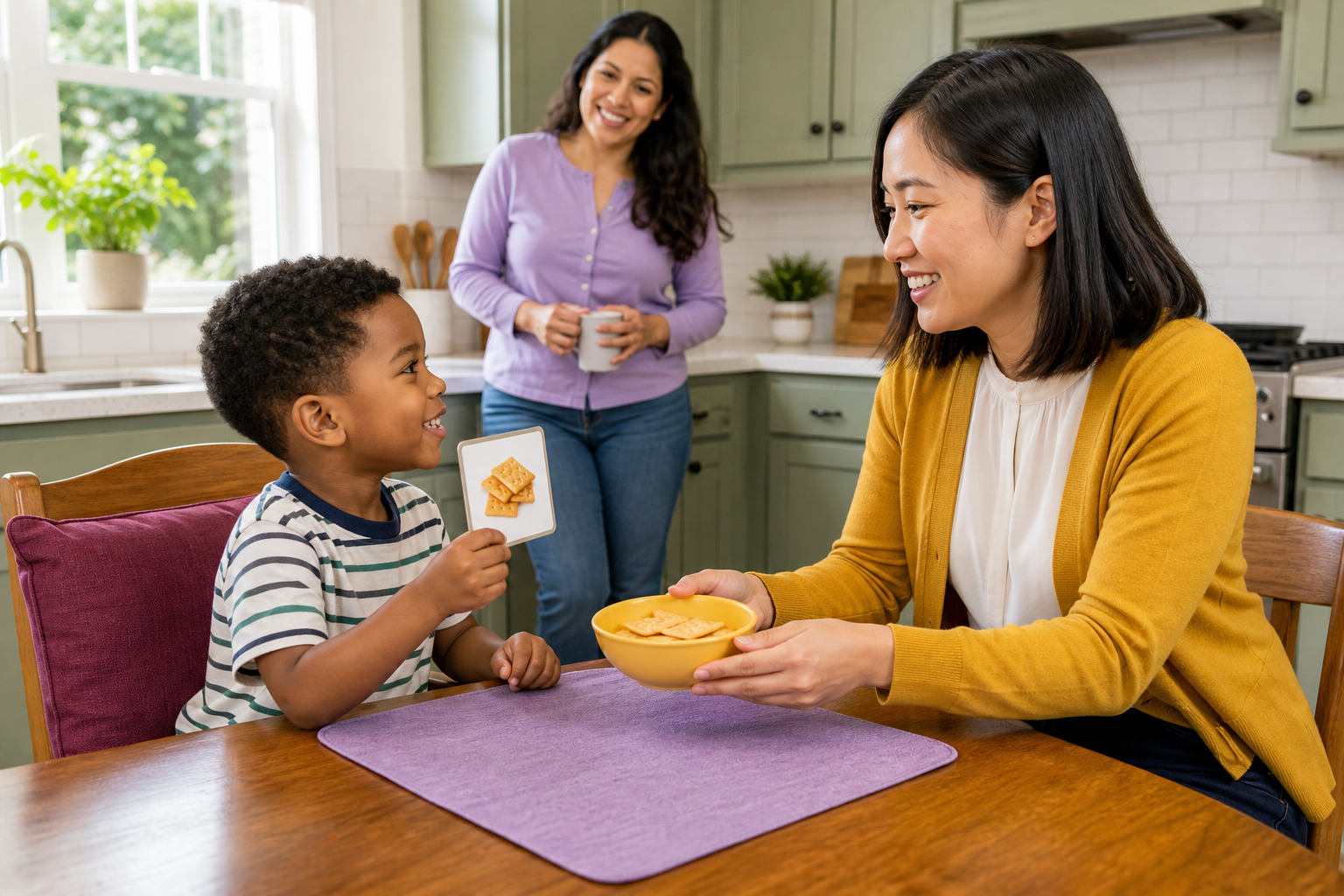
A session rarely looks like school. Picture snack time at your kitchen table. Your child wants the crackers on the counter. The RBT waits for a request (a word, a sign, or a picture card, depending on your child’s goals), then hands the crackers over right away. That short exchange is a learning opportunity, and the RBT records how it went so the BCBA can track progress over weeks.
Other sessions might focus on getting dressed before school, brushing teeth, cleaning up toys, or sitting through a short family meal. The goals are individualized and measurable. A BCBA sets them after an in-home assessment that combines observation, conversations with you, and standardized tools.
That assessment is for planning treatment. It is not a diagnostic evaluation.
Why ABA at all? According to the CDC, behavioral approaches have the most evidence for treating symptoms of autism spectrum disorder, and ABA is the best known of them.
Why do North Fulton families choose home-based ABA?
The biggest reason is that skills tend to stick when they are taught where they are used. Behavior analysts call this generalization. A child who learns to wash hands at their own bathroom sink, with their own soap and their own step stool, has fewer changes to adjust to when it is time to do it without help.
Schedules matter too. Between school pickup, activities, and work, a round trip to a clinic can take up an entire afternoon. In-home sessions are planned around the week you already have.
Some children also settle in faster at home. Familiar rooms and toys mean fewer transitions, and a child who is not spending energy adjusting to a new building often has more of it for learning.
Clinic-based ABA is a good fit for some children, and it is worth understanding both options. Our guide on the difference between in-home and clinic-based ABA therapy compares them side by side.
Who will be on your child’s care team?
Two roles do most of the work, and it helps to know the difference.
A Board Certified Behavior Analyst (BCBA) is a graduate-level clinician certified by the Behavior Analyst Certification Board. Your child’s BCBA conducts the assessment, writes the treatment plan, and supervises every part of it. That supervision is ongoing. The BCBA reviews session data, observes sessions in your home, coaches the RBT, and adjusts goals as your child progresses or gets stuck.
A Registered Behavior Technician (RBT) is a certified paraprofessional who delivers one-on-one sessions under the BCBA’s direction. This is the person your child will see most often, and the one who gets to know their favorite toys, snacks, and jokes.
Samba ABA was founded by Dr. Kristine Cortez, Ed.D., BCBA, LBA, who leads the clinical team. When you compare providers in North Fulton, ask each one how often a BCBA will be in your home and how quickly goals are updated. The answers tell you a lot about how a program runs.
What is your role as a parent or caregiver?
You know your child better than anyone else on the team. That knowledge shapes the plan from day one.
Parent and caregiver training is part of every Samba ABA plan from the start. It includes live coaching during sessions, separate training time, written and visual resources, and regular check-ins with your BCBA. Grandparents and other primary caregivers can take part as well, which helps when more than one adult handles bedtime or school drop-off.
A parent or caregiver is usually home during sessions, especially for younger children. Nobody expects you to be an expert on the first day. You will learn the same strategies the RBT uses, a little at a time, so the progress made during sessions keeps going in the hours between them. Our article on the importance of parent training in ABA therapy explains why this matters so much.
How do you get started with in-home ABA therapy in Alpharetta?
Most families move through four steps:
- Intake call and insurance verification. Our team checks your coverage and explains what documents you need, typically your child’s autism diagnosis report and a physician referral. Samba ABA does not provide diagnoses.
- In-home BCBA assessment. The BCBA observes your child at home and talks with you about goals, routines, and what is hardest right now.
- Individualized treatment plan. The BCBA writes measurable goals specific to your child and recommends a schedule.
- Ongoing sessions and caregiver training. An RBT begins regular sessions under BCBA supervision, and your coaching starts alongside them.
The first 90 days follow a clear pattern. Weeks one through four focus on rapport: the RBT plays, learns what your child enjoys, and builds trust. Active treatment ramps up in weeks four through eight. Between weeks eight and twelve, the BCBA completes a formal progress review with you.
On cost, Georgia Medicaid covers ABA for children under 21 with an autism diagnosis, and Medicaid-enrolled children usually pay nothing for covered services. Our article Does Georgia Medicaid Cover ABA Therapy for Children with Autism? explains the details. Private plans vary, and we confirm your benefits at intake.
If your child is under three and still waiting on an evaluation, Georgia’s early intervention program, Babies Can’t Wait, can help in the meantime.
Frequently asked questions
Does Samba ABA diagnose autism?
No. Your child needs a formal autism spectrum disorder diagnosis from a qualified provider before ABA therapy can begin.
Do I need to be home during sessions?
Usually, yes, especially for younger children. Being there also gives you the chance to see strategies in action and practice them with coaching.
Which insurance plans does Samba ABA accept in Alpharetta?
Georgia Medicaid through Wellpoint and CareSource, plus private plans including Blue Cross Blue Shield, Anthem, and Alliant. We verify your specific coverage during intake.
How many hours of therapy will my child need?
That depends on your child. The BCBA recommends hours based on the assessment, and your insurance plan authorizes them before sessions begin.
Ready to start in-home ABA therapy in Alpharetta?
Therapy that happens in your own home fits around school, work, and family life in North Fulton instead of competing with it. The first step is a short conversation about your child and your coverage.
Schedule an intake call with Samba ABA or call (404) 779-8860.