
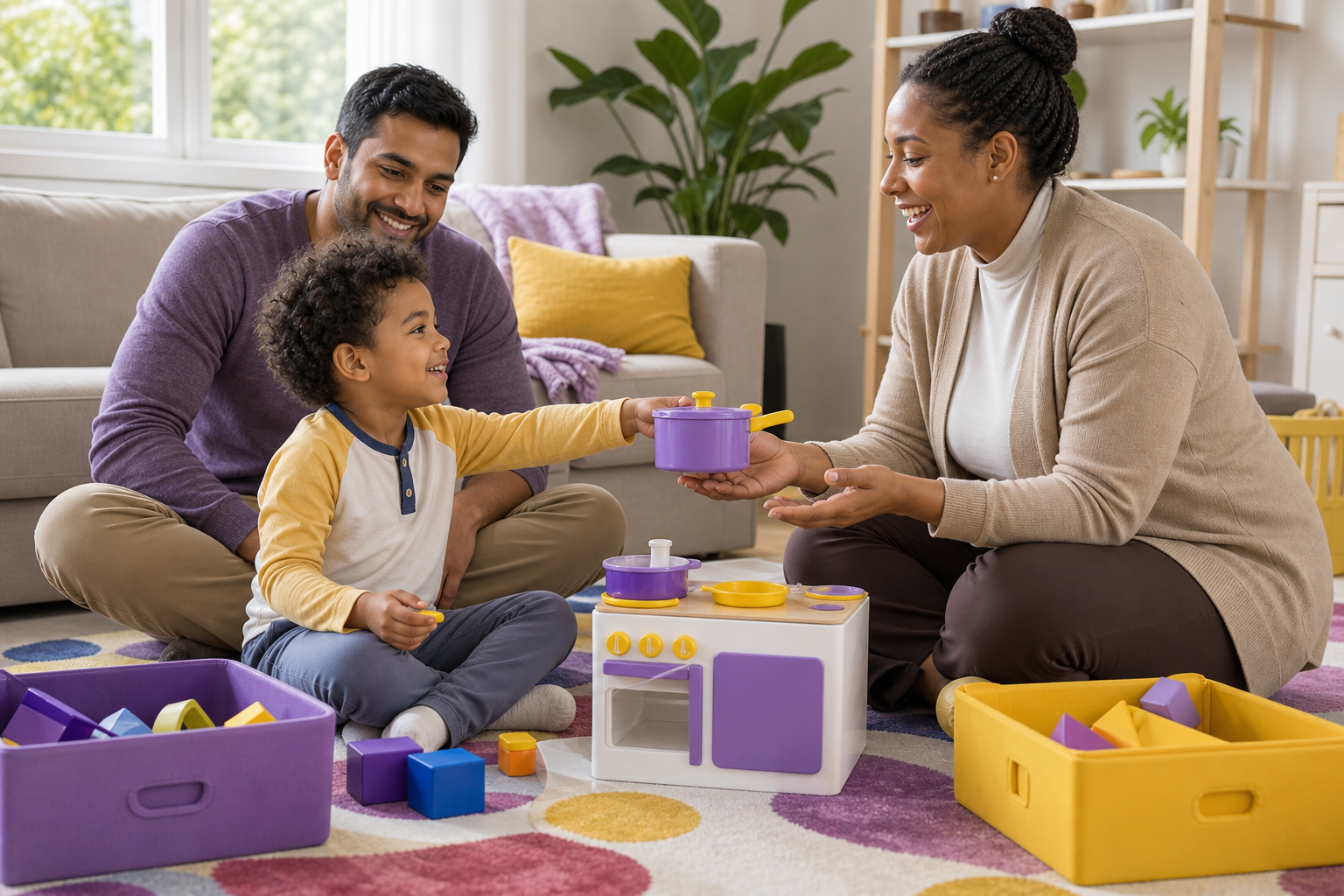
If you’re looking for ABA therapy in Johns Creek, Samba ABA offers 100% in-home Applied Behavior Analysis within a confirmed travel radius. A Board Certified Behavior Analyst (BCBA) leads assessment and planning, while Registered Behavior Technicians (RBTs) or behavior technicians provide direct support under supervision. Care is built around everyday routines, from getting dressed to after-school transitions, with caregivers included in the conversation. Learn more about the Samba ABA Johns Creek service area as you consider your options.
Inviting a care team into your home can feel personal. Parents may be weighing privacy, siblings, work schedules, travel across North Fulton, and whether sessions will feel like a good fit. This guide explains what home-based ABA can look like, what to ask providers, and what to verify before getting started.
Key Facts
- Setting: 100% in-home care, with immediate-community support only when clinically appropriate and available.
- Service area: Johns Creek and North Fulton, subject to address-level travel-radius confirmation.
- Ages served: Toddlers through adolescents, generally ages 2–21.
- Common goals: Communication, self-regulation, social interaction, transitions, independence, and daily living skills such as dressing and eating.
- Clinical oversight: A BCBA conducts assessment, develops and reviews the plan, and supervises direct services from RBTs or behavior technicians.
- Coverage: Insurance benefits, provider participation, documentation, and prior authorization must be confirmed for each family.
What In-Home ABA Therapy in Johns Creek Can Look Like
Applied Behavior Analysis uses individualized goals and data to support skills that matter in daily life. A home visit may include a caregiver check-in, rapport or play, practice within a routine, data collection, and a brief recap. For a broader explanation, read what in-home ABA therapy involves. Families preparing for a first visit can also review what to expect during a child’s first in-home session.
The focus depends on the child and family. For younger children, goals may include early communication, play, imitation, transitions, toileting, eating, and other routines. For school-age children and adolescents, support may center on after-school transitions, self-regulation, flexible routines, social carryover, independence, and age-appropriate daily living skills.
Home should remain a place of natural growth, not a mini-clinic. Privacy, dignity, child choice, consent, sibling activity, and caregiver bandwidth are part of the fit. Goals should be observable, reviewed with the family, and adjusted when data or caregiver feedback points to a better approach.
The 4C Johns Creek Care-Fit Model
When comparing providers, this simple lens can help keep the conversation grounded in your family’s actual life.
Context
What routines are hardest right now? Consider the child’s developmental stage, strengths, preferences, communication needs, and your family’s goals. School-to-home transitions, meals, play, dressing, and sibling routines can all provide useful context.
Capacity
Look at schedule windows, caregiver bandwidth, privacy, household boundaries, usable space, and travel-radius realities. In-home care should be sustainable and respectful of the household. It is not automatically easier than another setting.
Clinical Partnership
Ask who conducts the assessment, how the BCBA supervises services and reviews data, and how RBTs or behavior technicians communicate with caregivers. Clarify expectations for participation, choice, dignity, safety, and plan changes.
Coverage
Confirm address-level availability, Georgia Medicaid or private-plan benefits, medical-necessity documentation, prior authorization, network rules, and the information you will receive before regular care begins. Samba ABA notes Georgia Medicaid, including Wellpoint and CareSource, and major private plans such as Blue Cross Blue Shield, Anthem, and Alliant. Participation and benefits are still plan-specific.
How to Compare In-Home ABA Providers in Johns Creek
You do not need a scorecard to compare two or three providers. Start with a few practical questions:
- Can the provider confirm service at your address and explain its travel radius?
- Is care exclusively in-home, or does the provider use a hybrid or center-based model?
- Who leads assessment, supervision, and progress reviews?
- How will goals reflect your child’s age, preferences, and home routines?
- What should your family expect around caregiver participation, privacy, scheduling, benefits, and plan changes?
For more provider-fit questions, see this guide to choosing an in-home ABA program.
How Families in Johns Creek and North Fulton Start Care
A typical path begins with confirming address-level service coverage. The family then reviews intake and benefit requirements, completes an in-home BCBA assessment, develops an individualized plan, begins direct support, and reviews progress with the care team.
The timing and weekly schedule depend on assessment findings, goals, family preferences, staffing, and coverage. A provider should not guarantee a start date, number of hours, or specific outcome. For more detail on coverage questions, read this Georgia Medicaid guide for in-home ABA therapy.
FAQs About In-Home ABA Therapy in Johns Creek
What does a typical in-home ABA therapy session look like?
A session may include a caregiver check-in, rapport or play, practice within an everyday routine, data collection, BCBA supervision or review, and a brief recap. Activities vary based on the child’s goals, age, preferences, and home life.
Is in-home ABA therapy appropriate for every age or child?
Samba ABA serves toddlers through adolescents, generally ages 2–21. The right setting depends on assessment, goals, safety, consent, family preferences, and local availability. In-home care is not automatically the right choice for every child.
Is in-home ABA better than center-based or school-based therapy?
Each setting offers something different. Home can support practice within familiar routines, centers may provide structured materials or peer opportunities, and schools address classroom routines. The best fit depends on the child and family. Read this comparison of in-home and school-based ABA therapy for more context.
Does Georgia Medicaid or private insurance cover in-home ABA therapy in Johns Creek?
Coverage is plan-specific. It may depend on diagnosis, medical necessity, network status, documentation, prior authorization, and provider participation. Verify these details before care begins.
If you’re considering in-home ABA therapy in Johns Creek, start with a clear conversation about service coverage, clinical fit, family expectations, and benefits. Samba ABA’s 100% in-home model brings compassionate care into the natural environment and helps families make informed decisions about the support that fits their lives.